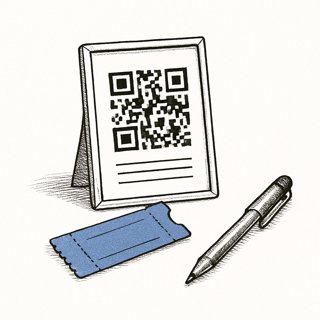
QR check-in for a real event
Level 2: two to three weeks, real architecture. Use with: build-web-app, use-an-api, database-basics. Resume line when done: Built {project_name}, a QR-code event check-in system used at the door of a real event — live at {url}
Brief
Registration and door check-in for an event you or your group is actually running: a club showcase, a tournament, a fundraiser evening. People register in advance and receive a personal QR code; at the door, a staff device scans the code, the system marks them arrived, and a live counter shows how full the room is. Registration data lives in a hosted database (Supabase free tier, whose auth also protects the door scanner); QR codes are generated through a library or a free QR API, and scanning uses the phone camera via a browser scanning library. Frontend deploys free on Netlify or Vercel. Free events only; the system never touches ticket money.
Personalize
- The event. Real, dated, and expecting at least fifteen people. Agree with the organizers that your system runs the door before you start.
- What registration collects. The minimum the organizers truly need. State on the form what is collected, why, and when it gets deleted after the event.
- The door reality. Bad hallway lighting, cracked screens, guests who lost the email. Design the manual-lookup fallback as seriously as the scanner.
Milestones
- README first: attendee, registration, check-in event, and the full journey from signup to walking in.
- Registration form live by end of week one at a real URL, writing attendees to the hosted database.
- QR issuance: each registration gets a unique code rendered as a QR and delivered on the confirmation screen and by email.
- Scanner page behind staff sign-in: camera opens in the browser, reads a code, marks the attendee arrived.
- Double-scan handling: a code scanned twice shows already checked in, with the original arrival time, in big obvious text.
- Manual fallback: staff search by name for the guest whose phone died. Same permissions as scanning.
- Live dashboard: arrivals count updating as the door works, plus walk-in registration on the spot.
- Dress rehearsal with five friends and printed codes; time each check-in and fix the slowest step.
- The real event. You work the door with your own system. Final README with numbers from the night and the post-event data deletion carried out.
Done means
- Live URL; real people registered themselves in advance
- The system ran the door at the actual event, with real attendance numbers in the README
- Scanning, double-scan rejection, and manual lookup all worked under door conditions
- Scanner and dashboard require staff sign-in; attendee data is never publicly readable
- Registrations survive redeploys through the event
- Attendees were told what was collected; deletion after the event is documented and done; no secrets committed
- At least 20 commits across at least 12 distinct days; SESSIONS.md has an entry per session, written by you